Jerry B. Jenkins is a New York Times best-selling novelist (Left Behind Series) and biographer (Billy Graham, Hank Aaron, Walter Payton, Orel Hershiser, Nolan Ryan, Joe Gibbs and many more), with over 70 million books sold. His writing has appeared in Time, Reader’s Digest, Parade, Guideposts, and he has been featured on the cover of Newsweek.
Visit the author’s website.
From multi-million copy best-selling novelist Jerry Jenkins comes a compelling international thriller that conveys you from present-day Texas to a dank Roman dungeon in A.D. 67, then down the dusty roads of ancient Israel, Asia, and back to Rome.
A young seminary professor, Augustine Knox, is drawn into a deadly race to save priceless parchments from antiquities thieves and discovers a two- thousand-year old connection with another who faced death for the sake of the truth. I, Saul consists of two riveting adventures in one, transporting you between the stories of Augustine Knox and Saul of Tarsus.
Filled with political intrigue, romance, and rich historical detail, I, Saul is a thrilling tale of loyal friendships tested by life-or-death quests, set two millennia apart, told by a master storyteller.
Tor nT E x ASW EDNESDAy, M Ay 7“call now. desper8.”
The text appeared on Dr. Augie Knox’s phone at 8:55 a.m., seconds before he was to turn it off—protocol for profs entering a classroom at Arlington Theological Seminary.
Augie could have fired off a “give me a minute,” but the message was not signed and the sending number matched nothing in his contacts. The prefix 011-39-06 meant Rome. He’d traveled extensively in his thirty-eight years and enjoyed many visits to the Eternal City, but such a text could easily portend one of those I’ve-been-mugged-and-need- money scams. Whatever this was could wait until he got the Systematic Theology final exam started and could step into the hall with his phone.
Augie had long been fascinated by his students’ nervous chatter before
final exams. One announced, “I looked you up in Who’s Who, Doc, and I
know your full name.”
“Congratulations for discovering something you could have found in your student handbook four years ago.”
“No! That just says Dr. Augustine A. Knox! I found out what the A
stands for.”
“Good for you. Now, a few instructions . . .”
“Aquinas! Augustine Aquinas Knox! Man, what other career choice did you have?”
“Thank you for revealing the thorn in my flesh. If you must know, that moniker was my father’s idea.” Augie mimicked his dad’s monotone basso. “‘Names are important.They can determine a life’s course.’”
Many students chuckled, having sat under the elder Dr. Knox before he fell ill the year before.
“It also says you were adopted. Sorry, but it’s published.” “No secret,” Augie said.
Another hand shot up.“Was that a hint about the exam? Will we be speculating on Paul’s thorn in the flesh?”
“He’s only mentioned that mystery every class,” another said.
Augie held up a hand. “I trust you’re all prepared for any eventual-
ity.”
“So, what’s your dad’s name?”
“Ed!” someone called out. “Everybody knows that.” “Look it up,” Augie said. “You may find it revealing.”
With blue books distributed, Augie slipped out and turned on his
phone.The plea from Rome had already dropped to third on his message list. At the top was a voice mail from Dr. Moore, who had been filling in as acting department chair since Augie’s father had been hospitalized with a stroke.
Augie would have checked that one first, but next was a voice mail from Sofia Trikoupis, his heart. It was eight hours later in Athens, after five in the afternoon. “Call me at the end of your day,” her message said. “I’ll wait up.” It would be midnight her time by then, but she apparently needed his undivided attention. That would bug him all day. How he longed for them to be together.
His phone vibrated. Rome again. “urgent. call now, pls!” Augie pressed his lips together, thumbing in, “who’s this?” “trust me. begging.”
“not w/out knowing who u r.”
Augie waited more than a minute for a response, then snorted. As I
figured. But as he headed back into the classroom, his phone buzzed again. “zionist.”
Augie stopped, heat rising in his neck. He quickly tapped in, “90 minutes OK?”
“now! critical.”
Few people had been more important in Augie’s life than Roger Michaels, the diminutive fifty-year-old South African with a James Earl Jones voice and a gray beard that seemed to double the size of his pale, gnomish face. Augie would never lead a tour of an ancient city without Roger as the guide.
“2 mins,” Augie texted.
He rushed to his father’s old office, which still bore the senior Dr. Knox’s nameplate on the door. Augie knocked and pushed it open.“Les, I need a favor.”
Dr. Moore took his time looking up from his work. “Number one, Dr. Knox, I did not invite you in.”
“Sorry, but—”
“Number two, I have asked that you refer to me as Dr. Moore.”
“My bad again, but listen—”
“And number three,” the acting chair said, making a show of study- ing his watch, “we both know that at this very moment you are to be conducting—”
“Dr. Moore, I have an emergency call to make and I need you to stand in for me for a few minutes.”
Moore sighed and rose, reaching for his suit coat.“I know what that’s about.Take all the time you need.”
Augie followed him down the hall. “You do?” “You didn’t get my message?”
“Oh, no, sorry. I saw one was there, but I—”
“But you assumed other messages were more important. I said we needed to chat after your first exam.”
“Well, sure, I’ll be here.”
“Part of what we need to discuss is your father. Is that what your call is about?”
“What about my father?” “We’ll talk at ten.”
“But is he—”
“There have been developments, Dr. Knox. But he is still with us.” As Dr. Moore headed for the classroom, Augie ducked into a stair-
well, away from the windows and the relentless sun forecasters were saying would push the temperature at least twenty degrees above normal by 2:00 p.m., threatening the 107° record for the month.
Augie wasn’t getting enough signal strength to complete his call, so he hurried back out to the corridor. Cell coverage was still weak, so he stepped outside. It had to be near 90° already. Scalp burning, he listened as the number rang and rang.
Augie moved back inside for a minute, braced by the air condition-
ing, then ventured out to try again. He waited two minutes, tried once more, and felt he had to get back to class.
On a third attempt, as he neared the entrance, it was clear someone had picked up a receiver and hung up. Augie dialed twice more as he walked back to take over for Dr. Moore. Just before he reached the class- room, his phone came alive again with a text.
“sorry. later. trash ur phone. serious.”
Augie couldn’t make it compute. Had his phone been traced? Tapped? If he got a new one, how would Roger know how to reach him?
Dr. Moore stood just inside the classroom door and emerged imme- diately when he saw Augie. “Talk to your mother?” he said.
“No, should I?”
Moore sighed and opened his palms. “You interrupt my work and don’t check on your father?”
Augie reached for his cell again, but hesitated. If he used it, would he be exposing his mother’s phone too?
“Call her after we’ve talked, Dr. Knox. Now I really must get back to my own responsibilities.”
It was all Augie could do to sit still till the end of class. Before get- ting back to Dr. Moore, he dropped off the stack of blue books in his own office and used the landline to call his contact at Dallas Theolog- ical Seminary, just up the road. Arlington Sem sat equidistant between DTS to the east and the massive Southwestern Baptist Seminary to the west. Arlington was like the stepchild no one ever talked about, a single building for a couple of hundred students, struggling to stay alive in the shadows of those two renowned institutions.When Augie needed some- thing fast, he was more likely to get it from the competition. Such as a new phone.
Like his father before him, Augie was the travel department at
Arlington. No auxiliary staff handled logistics as they did at DTS and Southwestern. The head techie at Dallas was Biff Dyer, a string bean of a man a few years older than Augie with an Adam’s apple that could apply for statehood. He could always be counted on to program Augie’s phone, depending on what country he was traveling to.
“Calling from your office phone, I see,” Biff said. “What happened to the cell I got you?”
“It’s been compromised.”
Biff chuckled. “Like you’d know.What makes you think so?” “I need a new one.Trust me.”
“I’ll just switch out the chip.You’re not gonna find a better phone. How soon you need it?”
“Fast as possible.”
“Why doesn’t that surprise me? I’m not deliverin’ it. Can you come by during normal hours?”
There was a knock at Augie’s door and he wrenched around to see
Les Moore’s scowl. “Gotta go, Biff.”
“Sorry, Les. On my way right now. Or do you want to just meet here?” “Here would not be any more appropriate than your insisting on our being on a first-name basis,” Dr. Moore said, scanning the tiny chamber in which the guest chair was folded in a corner and brought out only
when necessary.
“C’mon, Les. You were only a couple years ahead of me. We hung out, didn’t we?”
“Hardly. You spent most of your free time in the gym with the—
what?—six other jocks who happened to enroll here.”
It was true. And everyone knew the library had been where to find
Les Moore.
Augie looked at his watch. Another final at 11. He followed his interim
boss back to his father’s old office. It wasn’t that much bigger than his, but at least the guest chair didn’t block the door.
“Would you start with my dad?” Augie said as he sat.
“I would have thought you’d have already checked in with your mother, but all right. She called this morning, knowing you were in class. Your father has slipped into a coma.”
Augie nodded slowly. “She okay?”
“Your mother? Sure. It’s not like he’s passed. She just thought you might want to visit this afternoon.”
“Appreciate it.”
“Now then, Dr. Knox, I have some paperwork here that I’m going to need you to sign. Frankly, it’s not pleasant, but we’re all expected to be team players and I’m going to assume you’ll accede to the adminis- tration’s wishes.”
“What’s up?”
“You’re scheduled to teach summer-school Homiletics beginning four days after commencement.”
“A week from today, right.”
“And we have contracted with you for this stipend, correct?”
Why Les felt it necessary to pencil the figure on the back of a business card and dramatically slide it across the desk, Augie could not fathom.
“Yep, that’s the fortune that’s going to let me retire by forty.”
“Um-hm. Humorous. It is my sad duty to ask you to agree to under- take the class for two-thirds that amount.”
“You’re serious.” “Always.”
That was for sure.
“Les—Dr. Moore, you know we do these classes pretty much as gifts to the sem. Now they seriously want us to do them for less?”
“This is entirely up to you.” “I can refuse?”
“We’re not going to force you to teach a class when we have to renege on our agreement.”
“Good, because I just don’t think I can do it for that.”
“I’ll report your decision. We’ll be forced to prevail upon a local adjunct instruct—”
“Like that youth pastor at Arlington Bible—” “He’s a graduate, Dr. Knox.”
“I know! I taught him. And he’s a great kid, but he didn’t do all that well in Homiletics, and there’s a reason they let him preach only a couple of times a year over there.”
“He’ll be happy to do it for this figure—probably even for less.” “And the students be hanged.”
Les cocked his head. “Naturally, we would prefer you . . .”
Augie reached for his pen and signaled with his fingers for the doc- ument.
“I’m glad I can count on you, Dr. Knox. Now, while we’re on the subject, I’m afraid there’s more.You were due for a four percent increase beginning with the fall trimester.”
“Let me guess, that’s not going to happen either.” “It’s worse.”
“What, now it’s a four percent decrease?” “I wish.”
“Oh, no.”
“Dr. Knox, we have seen an alarming downturn in admissions, and the administration is predicting a fall enrollment that puts us at less than breakeven, even with massive budget cuts.We’re all being asked to accept twenty percent reductions in pay.”
Augie slumped. “I was hoping to get married this fall, Les. I can barely afford the payments on my little house as it is.”
“This is across the board, Dr. Knox. The president, the deans, the chairs, all of us. Some departments are actually losing personnel. Mainte- nance will be cut in half, and we’ll all be expected to help out.”
Arlington had been staggering along on a shoestring for decades, but this was dire. “Tell me the truth, Dr. Moore. Is this the beginning of the end? Should I entertain the offers I’ve gotten from Dallas over the years?” “Oh, no! The trustees wish us to weather this storm, redouble our efforts to market our distinctives, and then more than make up for the pay cuts as soon as we’re able. Besides, the way your father bad-mouthed Dallas and Southwestern his whole career, you wouldn’t dream of insult-
ing him by going to either, would you?”
“He bad-mouthed everything and everybody, Les.You know that.” “Not a pleasant man. No offense.”
Augie shrugged. “You worked for him. I lived with him.”
“Do you know, I have heard not one word from your father since the day I was asked to temporarily assume his role? No counsel, no guidelines, no encouragement, nothing. I assumed he was angry that you had not been appointed—”
That made Augie laugh.“He still sees me as a high school kid! Forget all my degrees. Anyway, I wouldn’t want his job, or yours. It’s not me.”
“How well I know. I mean, I’m just saying, you’re not the typical prof, let alone department chair.”
“I’m not arguing.”
Augie couldn’t win. Despite having been at the top of his classes in college and seminary, his having been a high school jock and continu- ing to shoot hoops, play touch football, and follow pro sports made him an outsider among real academics.Too many times he had been asked if
he was merely a seminary prof because that was what his father wanted for him.
Dr. Moore slid the new employment agreement across the desk. “Sorry, Les, but this one I’m going to have to think and pray about.” The interim chair seemed to freeze. “Don’t take too long. If they
aren’t sure they can count on you for the fall, they’ll want to consider the many out-of-work professors who would be thrilled, in the current econ- omy, to accept.”
“Yeah, that would help. Stock the faculty with young assistant pas- tors.”
“May I hear from you by the end of the day?”
“Probably not, but you’ll be the first to know what I decide.”
Back in his own office, Augie popped the chip out of his cell phone and put it in a separate pocket. He called his mother from his desk phone to assure her he would see her at the hospital late in the afternoon, then called Biff to tell him he would try to stop by DTS on his way.
“What’s the big emergency?” Biff said.
“Roger Michaels has himself in some kind of trouble.” “Tell me when you get here.”
During his 11:00 a.m. final Augie was summoned to the administra- tive offices for an emergency call. On the way he stopped by to see if Les would stand in for him again, but his office was dark.The final would just have to be unsupervised for a few minutes.
“Do you know who’s calling?” he said to the girl who had fetched him. If it was his mother . . .
“Someone from Greece.”
He finally reached the phone and discovered it was Sofia. “Thought you wanted me to call later, babe.You all right?”
“Roger is frantic to reach you.”
“I know. He—”
“He gave me a new number and needs you to call right now, but not from your cell.” She read it to him.
“Any idea what’s going on, Sof ?” Augie said as he scribbled. “This is not like him.”
“No idea, but, Augie, he sounded petrified.” “That doesn’t sound like him either.”
“You can tell me what it’s about later, but you’d better call him right away.”
Augie rushed to his office and dialed the number in Rome. It rang six times before Roger picked up. “Augie?”
“Yes! What’s—”
“Listen carefully. I’ve got just seconds. I need you in Rome as soon as you can get here.”
“Rog, what’s happening? This is the absolute worst time for me to—” “Give Sofia your new cell number and text me your ETA. I’ll give
you a new number where you can call me from Fiumicino as soon as you get in.”
“I don’t know when I could get there, Rog. I’ve got—” “Augie! You know I wouldn’t ask if it weren’t life or death.”

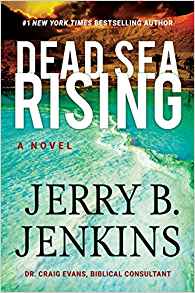 Nicole Berman is determined to find there the first concrete evidence of the biblical patriarch Abraham while leading her first archeological dig in Jordan. During the excavation, Berman discovers a 4,000-year-old complex that includes evidence she believes proves her theory. But a devastating cave-in nearly kills her and she awakens in a Saudi clinic, haunted by visions of what she may have seen ― evidence of Abraham and his two sons, the half-brothers Isaac and Ishmael. One discovery leads to another and Nicole sets off across the region to connect pieces of an ancient puzzle. She is secretly opposed by a striking Palestinian, Abed Hassan, whom she falls in love with, unaware of his ties to a clandestine organization, as the head of the World Islamic Network (WIN). Nicole is on the brink of revealing new truths that could revolutionize the relationship between Jews and Arab Muslims. Meanwhile, a new volunteer on her dig team, Max Nguyen from Vietnam, discloses alarming revelations that affect everything Nicole thought she knew about herself and her family. While she doggedly pursues pieces to the Abrahamic puzzle ― which she believes holds explosive implications for the 21st century ― her own history may be coming apart at the seams.
 Author of more than 195 books with sales of over 70 million copies, including the best-selling Left Behind series, Jerry B. Jenkins is former vice president for publishing and former chairman of the board of trustees for the Moody Bible Institute of Chicago.
 In The Valley of the Dry Bones, Jerry B. Jenkins overlays the ancient End Times prophecies of Ezekiel onto the landscape of modern California. After a 17-year drought, multiple earthquakes, and uncontrollable wildfires, the state is desolate. The United States President declares the state uninhabitable and irreparable, directing California’s 39 million citizens to relocate. From the air, California looks like a vast abandoned sand box, but to a few groups of people, it’s their home. With less than 1% of the population remaining in California at their own risk, the holdouts encounter a clash of cultures, ethnicities, religions, and politics that pits friend against friend with the future of California at stake.



Recent Comments